This week’s developments left investors navigating several crosscurrents and with more questions than answers. Can the Fed effectively combat inflation increasingly driven by supply-side pressures? Are investors becoming more sensitive to signs of decelerating growth? And will consumers’ words eventually catch up with their actions? These questions spark debate but offer few obvious answers. At IR+M, our objective is not to predict precisely which way the tide will turn or when. Instead, we seek to build portfolios that can withstand uncertainty and capitalize on ever-changing opportunities. In our view, consistency comes not from predicting the next market move, but from preparing for a range of possible outcomes.

- Investors adopted a more cautious tone as deteriorating consumer sentiment, persistent inflation, and renewed concerns over AI-related growth overshadowed stronger-than-expected retail spending
- Consumer sentiment deteriorated to its second-lowest reading on record, while the University of Michigan's Current Conditions Index reached an all-time low
- Despite historically weak sentiment, September retail sales rose 0.8%, well above expectations of 0.3%, though higher gasoline prices accounted for much of the increase
- Inflation accelerated in September as headline CPI increased 0.6% month-over-month and 3.7% year-over-year; producer prices also rose 1.3% last month as higher energy costs contributed to broader price pressures
- Investors continued to expect the Federal Reserve (Fed) would hold rates steady in October despite the stronger inflation data, but still anticipate another rate hike in December
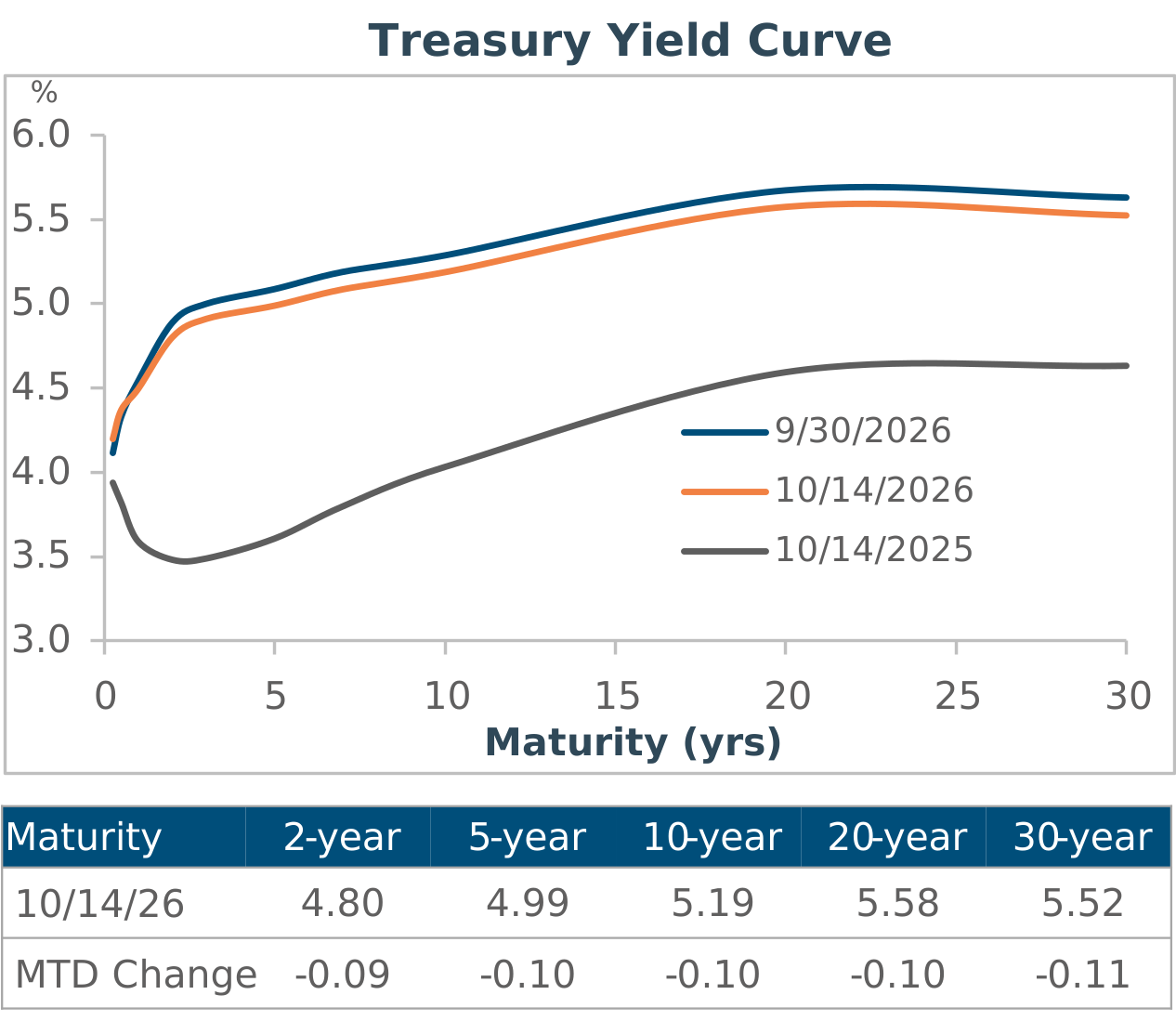
- The Treasury curve flattened as expectations for additional Fed tightening pushed short-term yields higher, while safe-haven demand helped anchor long-term rates; the spread between the 2- and 10-year Treasury yields narrowed 13bps week-over-week
- The Fed’s October Beige Book highlighted slowing economic momentum alongside ongoing price pressures, underscoring the challenges facing policymakers
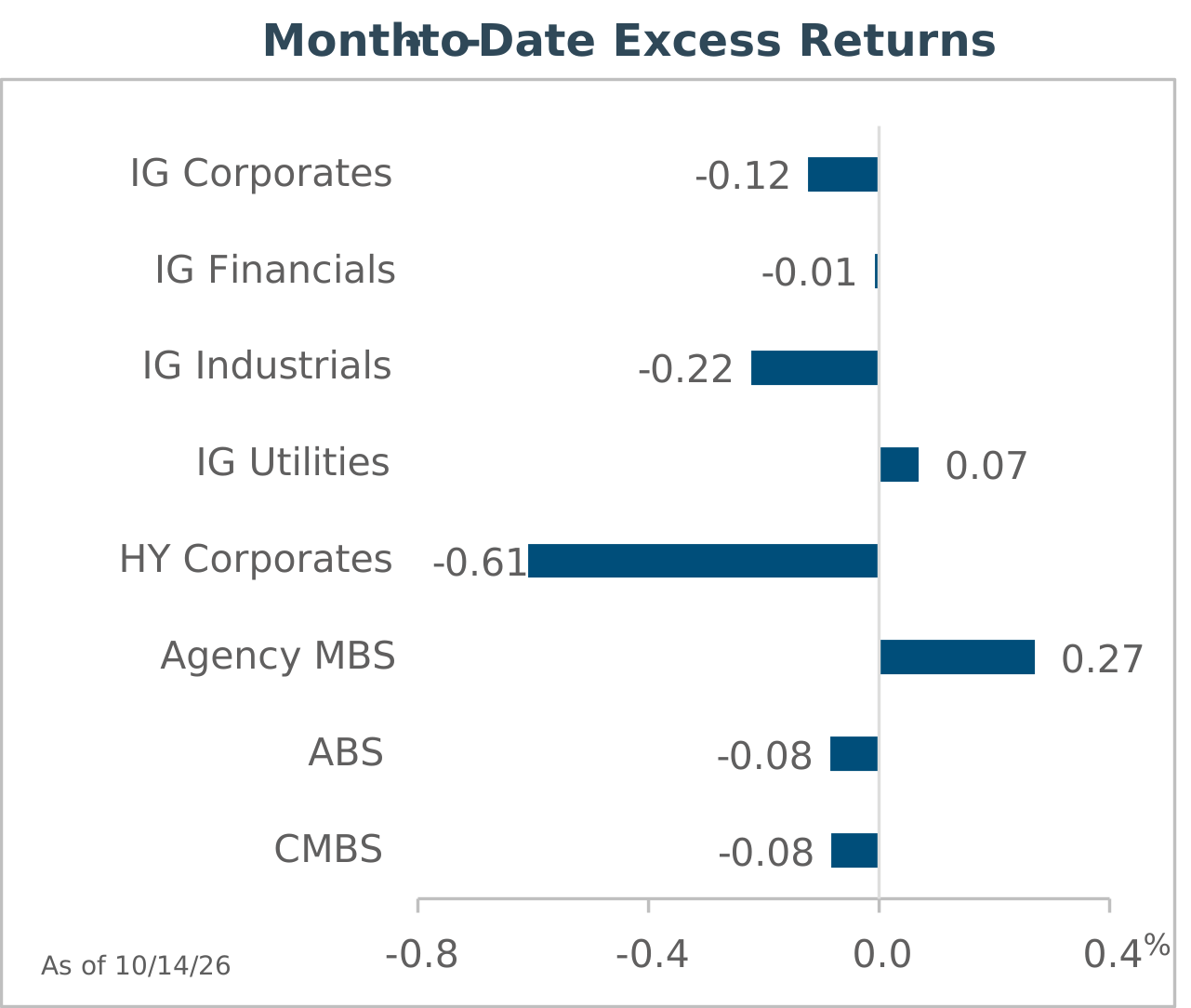
- Investment-grade (IG) and high-yield (HY) corporate spreads widened 3bps and 19bps week-over-week, respectively; renewed concerns surrounding the sustainability of AI growth pressured the Communications and Technology sectors
- The primary market slowed this week amid softer risk sentiment, with IG issuance totaling roughly $18 billion and HY supply under $3 billion
- Agency mortgage-backed securities (MBS) outperformed Treasuries and other spread sectors as interest rate volatility retreated from recent highs
- Municipals outperformed Treasuries, especially in shorter maturities, as front-end muni/Treasury ratios fell below 70%