This week’s Fed meeting served as useful reminder that greater macro uncertainty can, somewhat ironically, produce more consensus among officials on current and future policy. Even so, alignment does not beget certainty. The dot plot has historically missed reality by at least one cut or hike over periods of twelve months or more. As a result, we would caution investors against putting too much weight on the dot plot as a forecasting tool, but especially when the backdrop involves an ongoing conflict in the Middle East, potential cracks in private credit, and AI disruption. We believe investors are better served by emphasizing security selection, balance sheet strength, and cash-flow durability over trying to anticipate an increasingly uncertain macro path.

- The Federal Reserve (Fed) left the federal funds target range unchanged at 3.50-3.75%, which was widely anticipated, although there was one dissent in favor of a rate cut
- The Fed noted the uncertainty surrounding the conflict in the Middle East influenced their decision; however, elevated inflation and recent labor market developments remain a downside risk
- The updated dot plot reflected a median forecast of one 25bp cut this year and one cut in 2027 – market expectations are not pricing in the next interest rate cut until mid-2027
- The Producer Price Index rose 0.7% in February, above expectations, reflecting higher costs for goods and services even before the conflict in the Middle East started or oil prices spiked; services costs accounted for over half of the increase
- Initial jobless claims decreased by 8,000 last week to 205,000, while continuing claims climbed to 1.86 million, as the labor market continued to show signs of low firing, but also low hiring
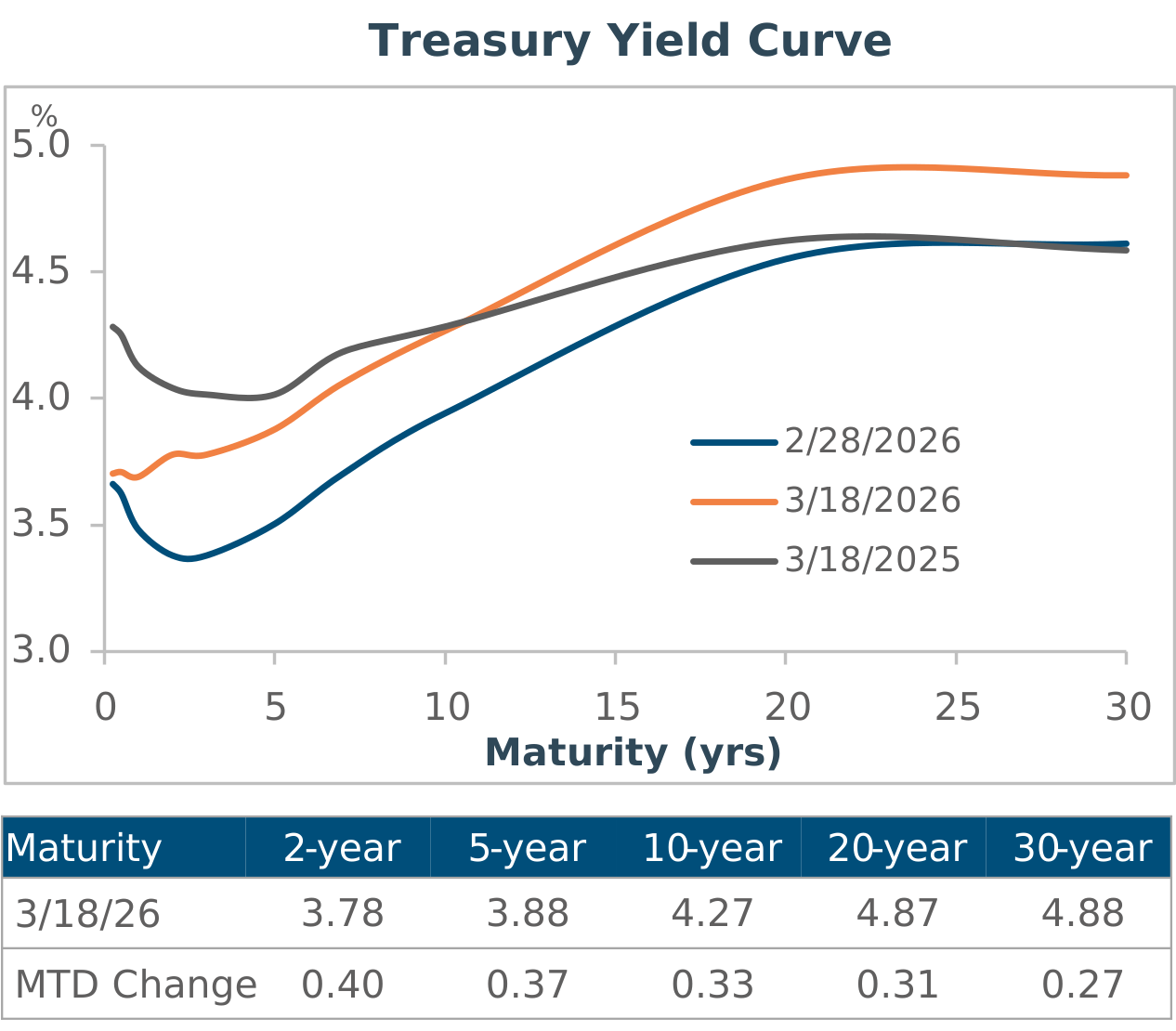
- Treasury rates edged modestly lower before rising during Chair Powell’s press conference where he suggested higher rates for longer; the yield curve flattened as the spread between the 2- and 30-year rates tightened 12bps to 110bps
- Investment-grade (IG) borrowers rushed to issue fresh debt ahead of the FOMC meeting, but it was still relatively light compared to last week’s barrage; supply totaled over $36 billion, below dealer forecasts of $40 billion
- Only one high-yield (HY) new issue was priced this week, totaling $550 million; the market will now focus on an upcoming $6 billion term loan to help fund a record-sized leveraged buyout of a gaming company
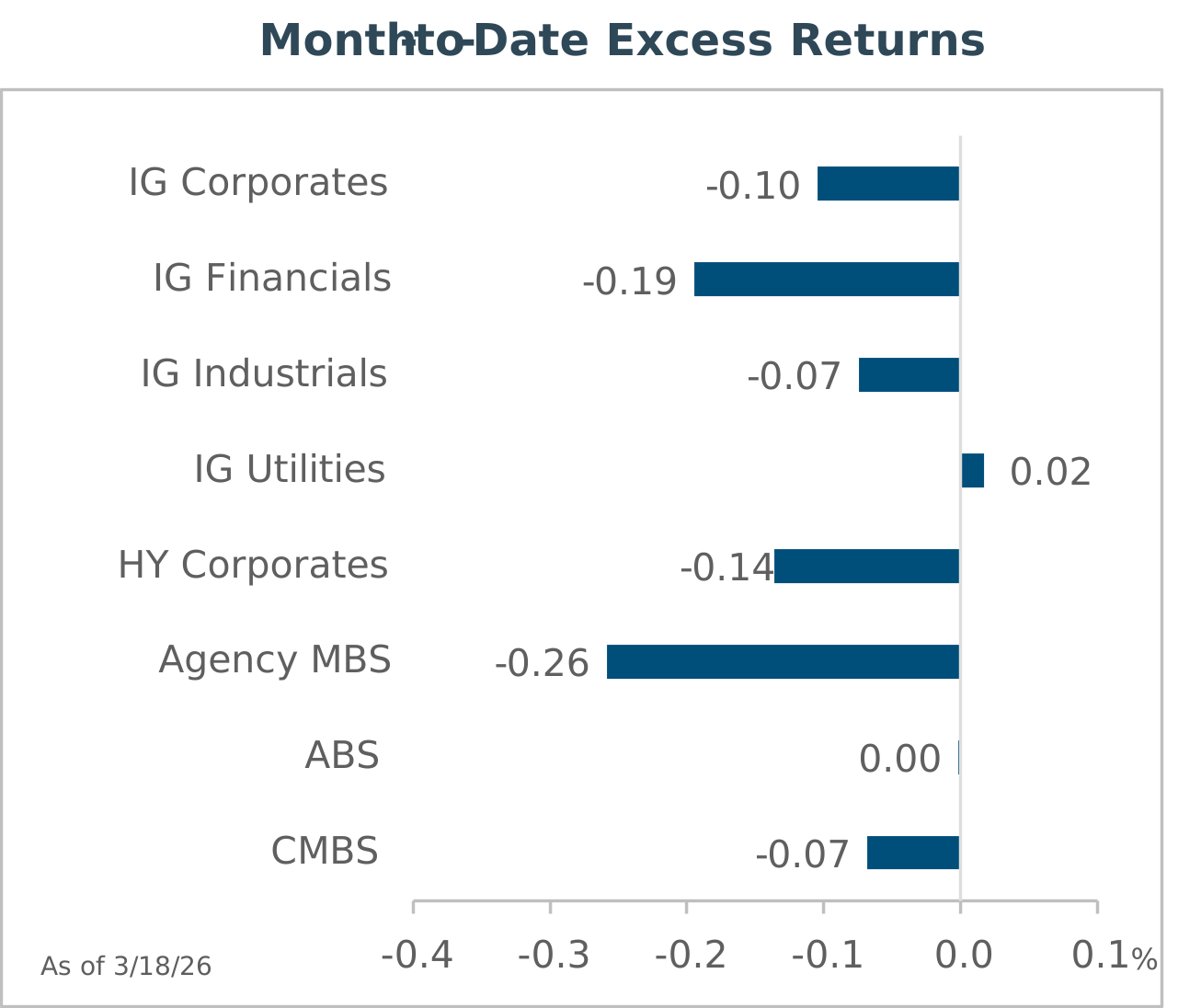
- The conflict in the Middle East, inflation uncertainty, and private credit stress continued to pressure corporate spreads, as IG and HY corporate spreads widened by 3bps and 12bps to 89bps and 306bps, respectively
- Asset-backed securities underperformed other securitized sectors amid the broader market volatility and softer liquidity heading into quarter-end; ABS spreads widened by 2bps to 50bps
- Long-duration municipals underperformed Treasuries as muni/Treasury ratios rose; the 10- and 30-year muni/Treasury ratio rose from 64.6% and 88.1% to 66.0% and 88.8%, respectively