While investors focus on headline events ranging from the World Cup to a potential record-setting SpaceX IPO, credit markets are increasingly focused on financing the AI buildout. This week alone, issuance spanned the high-yield, investment-grade, and securitized markets, highlighting how rapidly AI-related borrowing is expanding across fixed income sectors. Developers continue to tap a diverse mix of debt and equity capital to fund unprecedented infrastructure spending. While a broader funding base should help absorb near-term supply, AI is also blurring traditional market boundaries and changing how investors assess risk. In this environment, cross-sector collaboration, flexible relative-value analysis, and disciplined risk management have become increasingly important as financing structures continue to evolve.

- Markets experienced heightened volatility as stronger‑than‑expected US economic data and rising Middle East tensions contributed to a rate selloff, while uncertainty surrounding capital expenditures related to AI weighed on risk assets; US equity indices fell between 1.5% and 6% on the week
- Recent economic data showed signs of strength within the labor market and evidence of rising inflation, possibly leading the Federal Reserve (Fed) to evaluate a rate hike this year, as investors are pricing in a full interest rate hike by year-end
- Non-farm payrolls increased by 172k in May, exceeding expectations by 84k, while the unemployment rate and labor force participation rate remained unchanged at 4.3% and 61.8%, respectively; hiring gains were concentrated in the leisure and hospitality sector, though some economists noted that World Cup-related activity may have provided a modest boost to employment
- Headline CPI rose 0.5% month-over-month in May and 4.2% year-over-year, the highest reading since April 2023, with energy prices accounting for more than half of the monthly increase
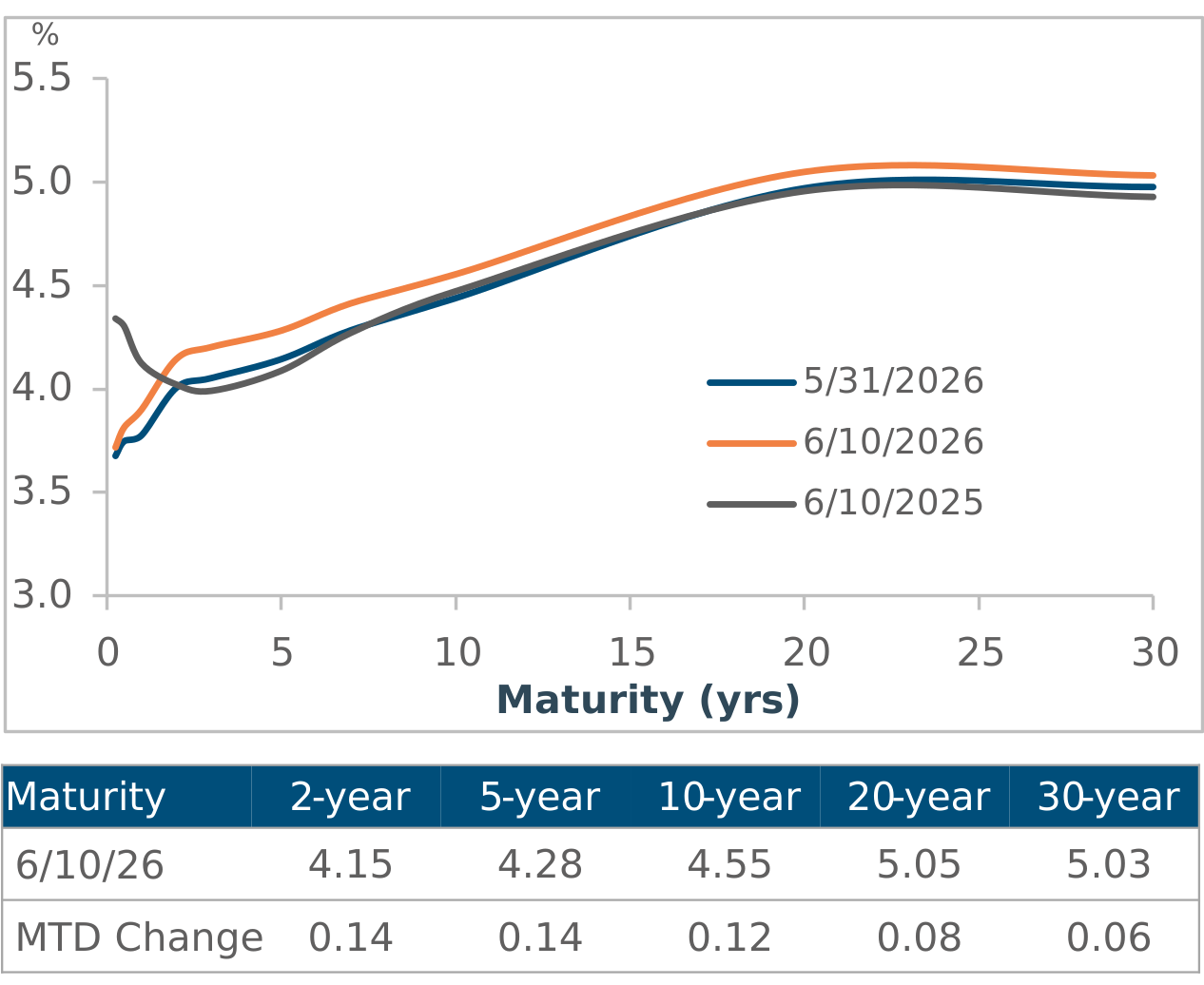
- Treasury yields moved higher across the curve as investors repriced the expected path of monetary policy amid rising geopolitical tensions and firm labor market; the curve flattened modestly, with the spread between 2- and 30-year Treasury yields narrowing 3bps to 88bps
- Investment‑grade (IG) supply fell short of dealer forecasts, totaling $27 billion for the week, as several borrowers delayed issuance amid the softer tone; High-yield (HY) issuance followed a similar pattern, totaling just under $5 billion
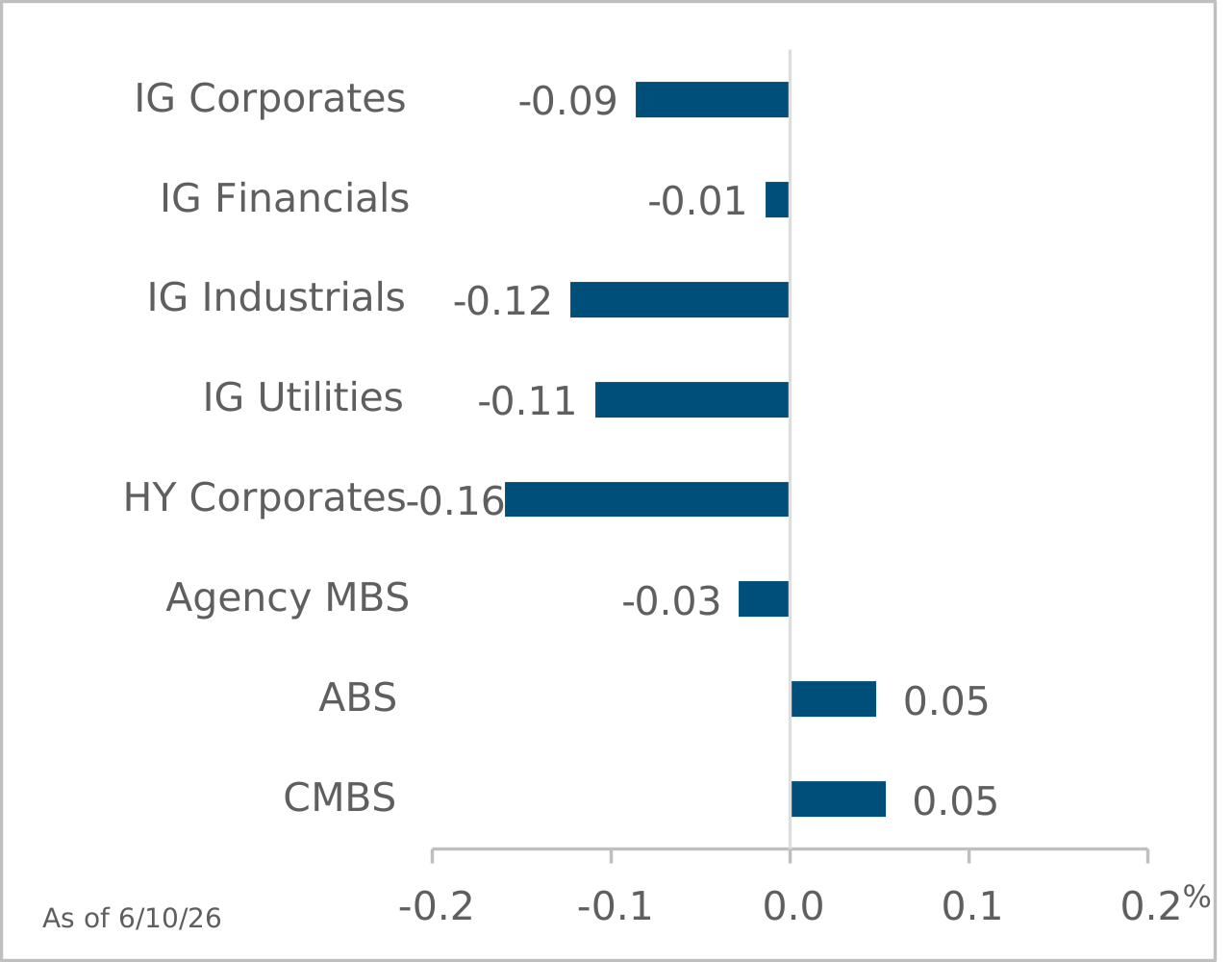
- IG corporate spreads were unchanged on the week at 73bps, while HY corporate spreads widened by 12bps to 275bps, with CCCs underperforming
- Data center funding continues to expand into the the commercial mortgage-backed securities (CMBS) sector, as evidenced by this week's $531 million single-asset single-borrower (SASB) deal
- Municipals outperformed Treasuries as muni/Treasury ratios declined across the curve; municipal bond funds reported over $1 billion of net inflows last week, marking the seventh consecutive week of net inflows exceeding $1 billion
Treasury Yield Curve
Month-to-Date Excess Returns