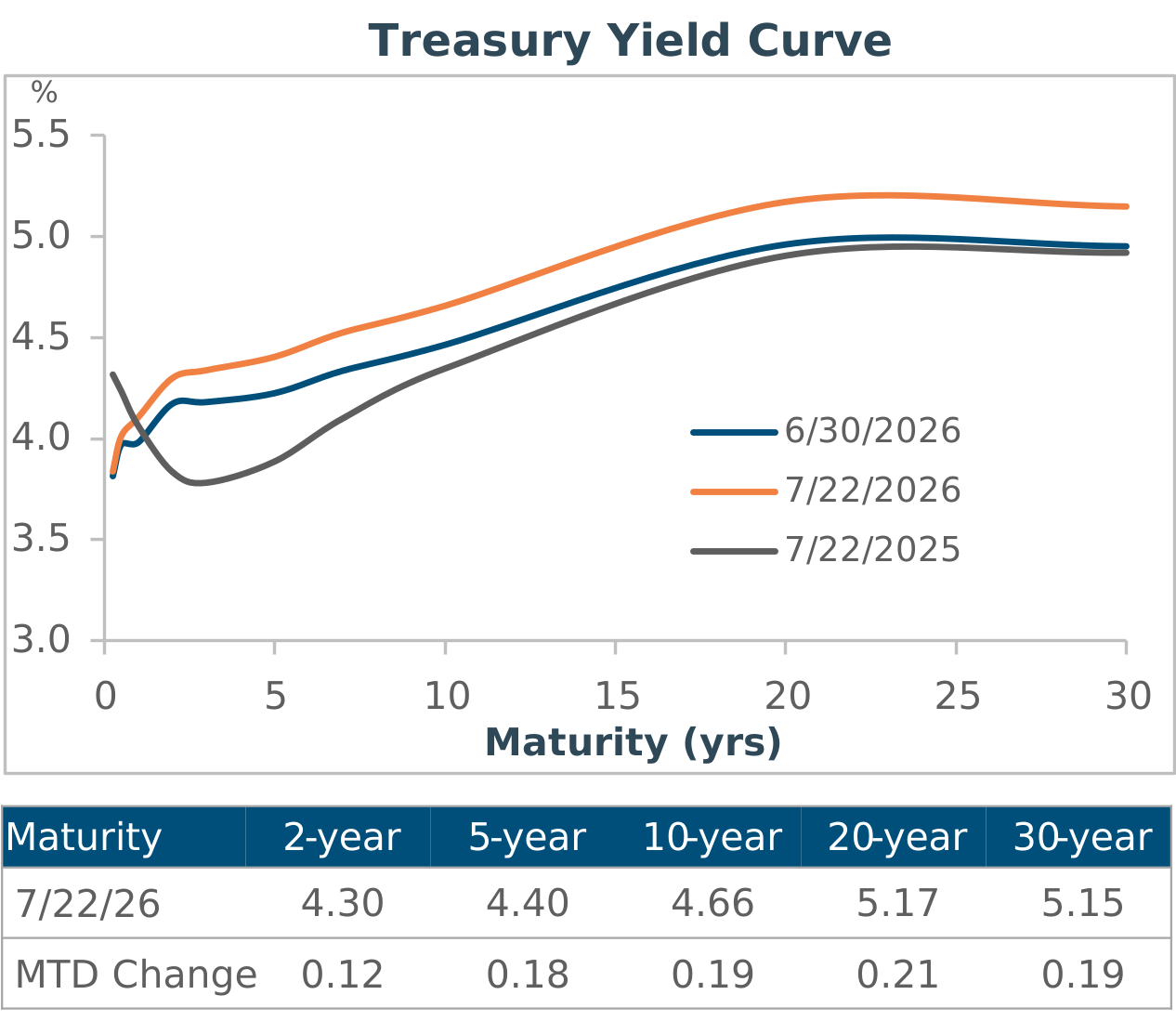
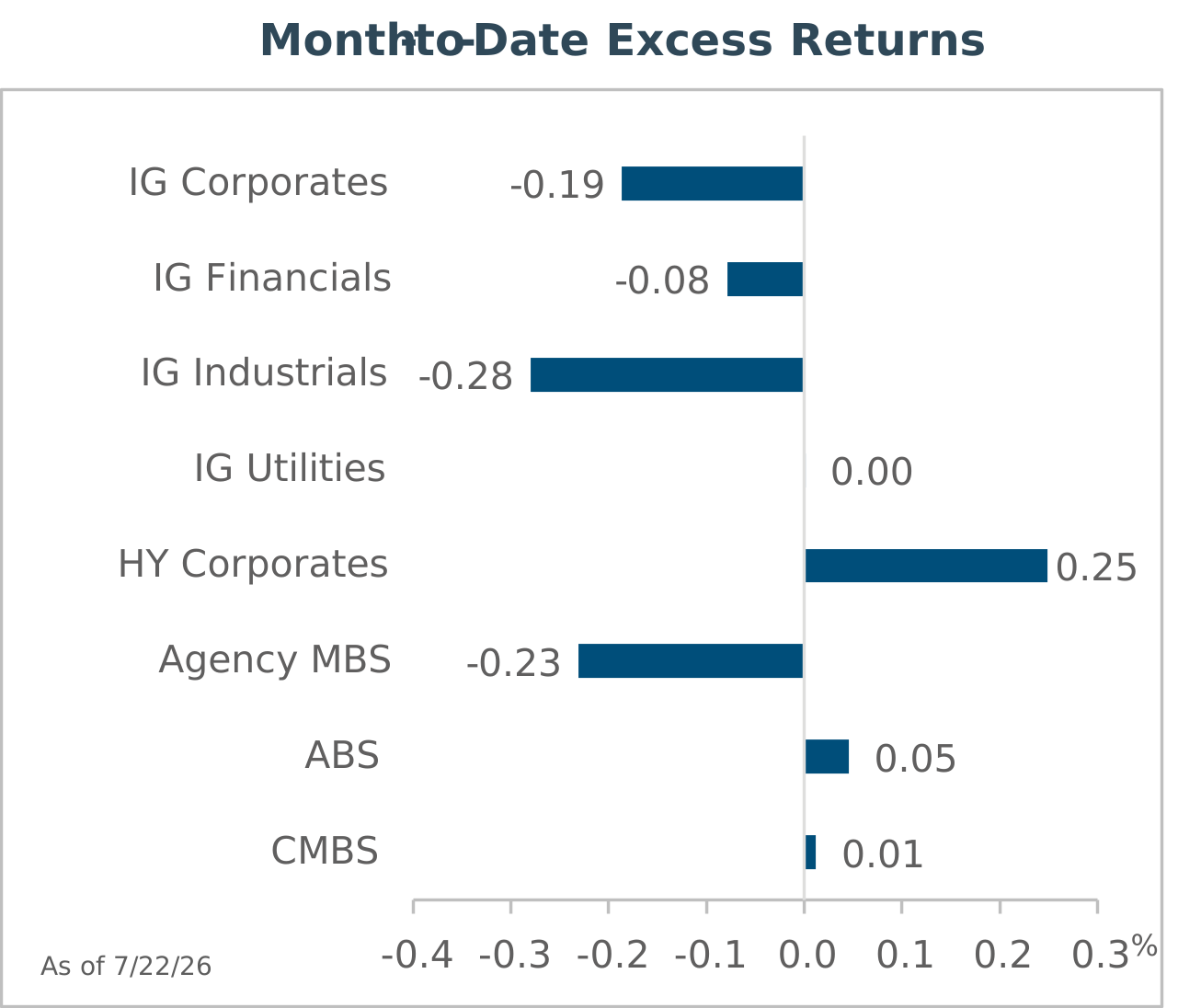
While volatility has picked up this week, it has been mostly felt by the Treasury market as corporate spreads have moved sideways. Interest rates on US government bonds increased across the curve week-over-week with the 10-year yield reaching a new year-to-date high of 4.71% today. Meanwhile, both investment-grade and high-yield spreads were virtually unchanged. Two resulting observations: first, aggregate spread levels may be masking pockets of dispersion beneath the surface, as investors become more selective on both issuer and structure. Second, higher rates may ultimately prove beneficial by creating more attractive entry points and improving future return potential. While recent rate volatility has tested sentiment, it has not meaningfully altered the underlying credit backdrop. In our view, volatility may create headlines, but income should drive long-term returns—and occasional dislocations remain a welcome source of opportunity for active investors.

- US fixed income markets weathered a modest risk-off backdrop as escalating tensions in the Middle East pushed oil prices higher, while renewed questions surrounding AI-related capital spending weighed on broader risk sentiment
- WTI crude and Brent oil rose 9% and 11%, respectively, while TTF natural gas increased by 16%
- Lower gasoline prices in June helped lift consumer sentiment to a five-month high, surpassing estimates, while concerns about longer-term inflation lingered despite one-year inflation expectations falling to 4.2%
- Initial jobless claims fell to 187,000, well below the consensus forecast of 210,000 and the lowest level since 1969, highlighting the limited layoff activity and underscoring the resilience of the labor market
- Continuous jobless claims declined slightly to 1.80 million, below expectations of 1.81 million
- Treasury yields rose across the curve, particularly in the front-end, as higher oil prices reinforced expectations of tighter monetary policy; the curve flattened, as the spread between the 2- and 10-year Treasury yields tightened by 6bps to 35bps
- Futures markets now fully price one 25bp rate hike at the September FOMC meeting, up from 57% odds a week earlier
- Investment-grade (IG) issuance slowed this week as earnings blackout periods kept many issuers on the sidelines; supply came in below $11 billion, falling short of the $25-$30 billion dealers had projected
- High-yield (HY) issuance maintained a gradual pace, as supply totaled roughly $6 billion on the week
- Despite continued weakness in select technology-related issuers, IG spreads IG spreads were unchanged at 77bps while HY spreads widened slightly by 1bp to 267bps
- Asset-backed securities (ABS) continued to outperform other securitized sectors on the month; ABS spreads tightened 1bp to 42bps week-over-week as heavy supply of $10 billion was met with strong demand
- Municipals underperformed Treasuries as muni/Treasury ratios rose across the curve, despite municipal bond funds reporting over $1.4 billion of net inflows last week for a thirteenth consecutive week of net inflows