As AI-related funding needs accelerate, issuers are becoming increasingly flexible in search of the most attractive source of capital. Last week, softer demand on hyperscaler bonds suggested investors may be becoming more selective. This week, QTS illustrated how issuers can respond by shifting financing needs across markets. After previously issuing IG corporate and ABS bonds, QTS tripled the size of its proposed leveraged loan deal while simultaneously canceling another planned bond offering. Fundamentals remain critical, but investors must also assess collateral, covenants, repayment terms, and legal protections. As the lines between sectors blur, we believe structure will become an increasingly important differentiator in AI-related investing. At IR+M, we view this as an opportunity, leveraging our ability to evaluate issuers across sectors while remaining selective on credit, structure, and price.

- Cooling inflation supported sentiment early in the week, though renewed volatility in technology-related issuers and escalating geopolitical tensions ultimately drove a modest risk-off tone
- Softer-than-expected inflation readings reinforced expectations that the Federal Reserve (Fed) could remain patient, prompting investors to reduce expectations for additional tightening
- Headline CPI fell 0.4% month-over-month in June, the first monthly decline since 2020, largely driven by the sharpest decline in gasoline prices since 2022
- Despite the monthly decline, inflation remained elevated, with headline and core CPI increasing 3.5% and 2.6% year-over-year, respectively
- Producer prices (PPI) fell 0.3% in June after a revised 0.6% gain in May; the moderation in prices was broad based across several categories and led by lower energy prices
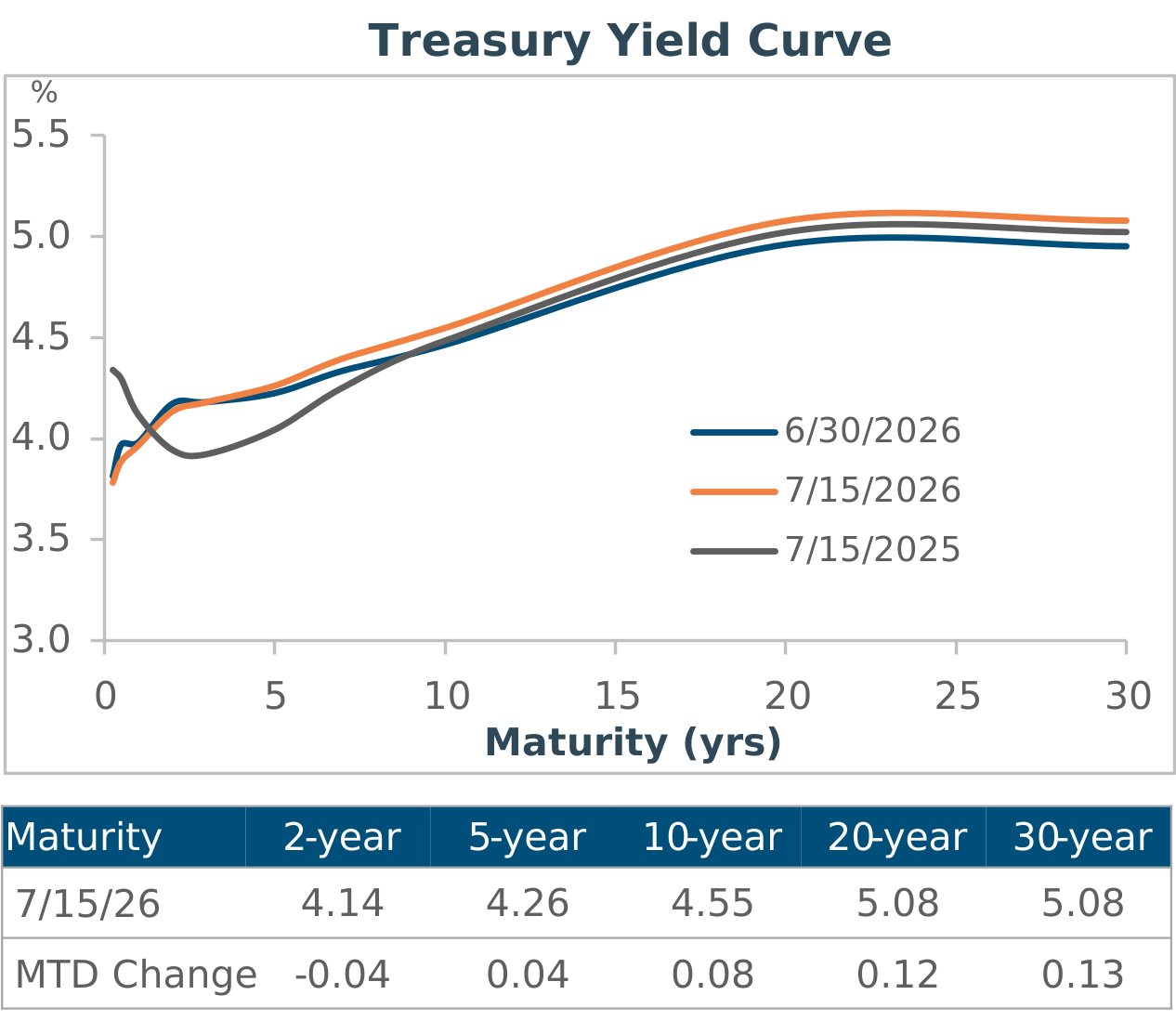
- Treasury yields declined, particularly in the front-end of the curve, as investors repriced expectations for Fed policy; the 2-year rate initially rose to 4.28% before ending the week at 4.14%, 8bps lower week-over-week
- Investment-grade (IG) supply totaled $47 billion, exceeding dealer expectations of $40 billion; large money center banks returned to the market following self-imposed earnings blackouts and accounted for two-thirds of the week’s issuance
- High-yield (HY) issuance maintained a steady pace this week despite escalating tensions in the Middle East, with weekly supply totaling $6 billion
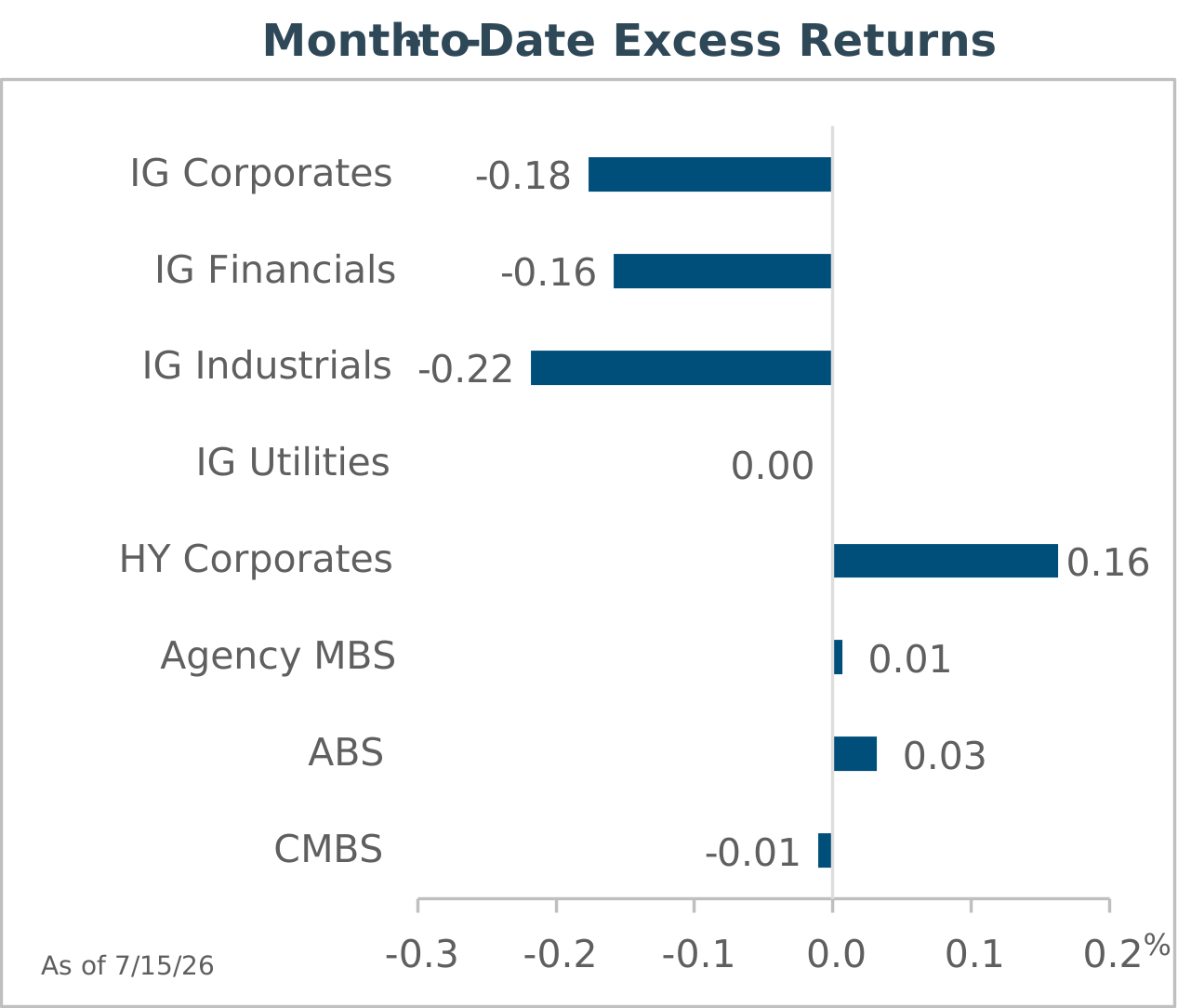
- Corporate spreads widened modestly amid the softer backdrop, as IG and HY spreads widened by 3bps and 2bps to 77bps and 266bps, respectively
- Agency mortgage-backed securities (MBS) benefited from lower interest rate volatility, outperforming Treasuries and other spread sectors
- Municipals underperformed Treasuries as muni/Treasury ratios rose across the curve; the 2- and 10-year muni/Treasury ratios increased from 56.4% and 65.0% to 57.6% and 66.7%, respectively