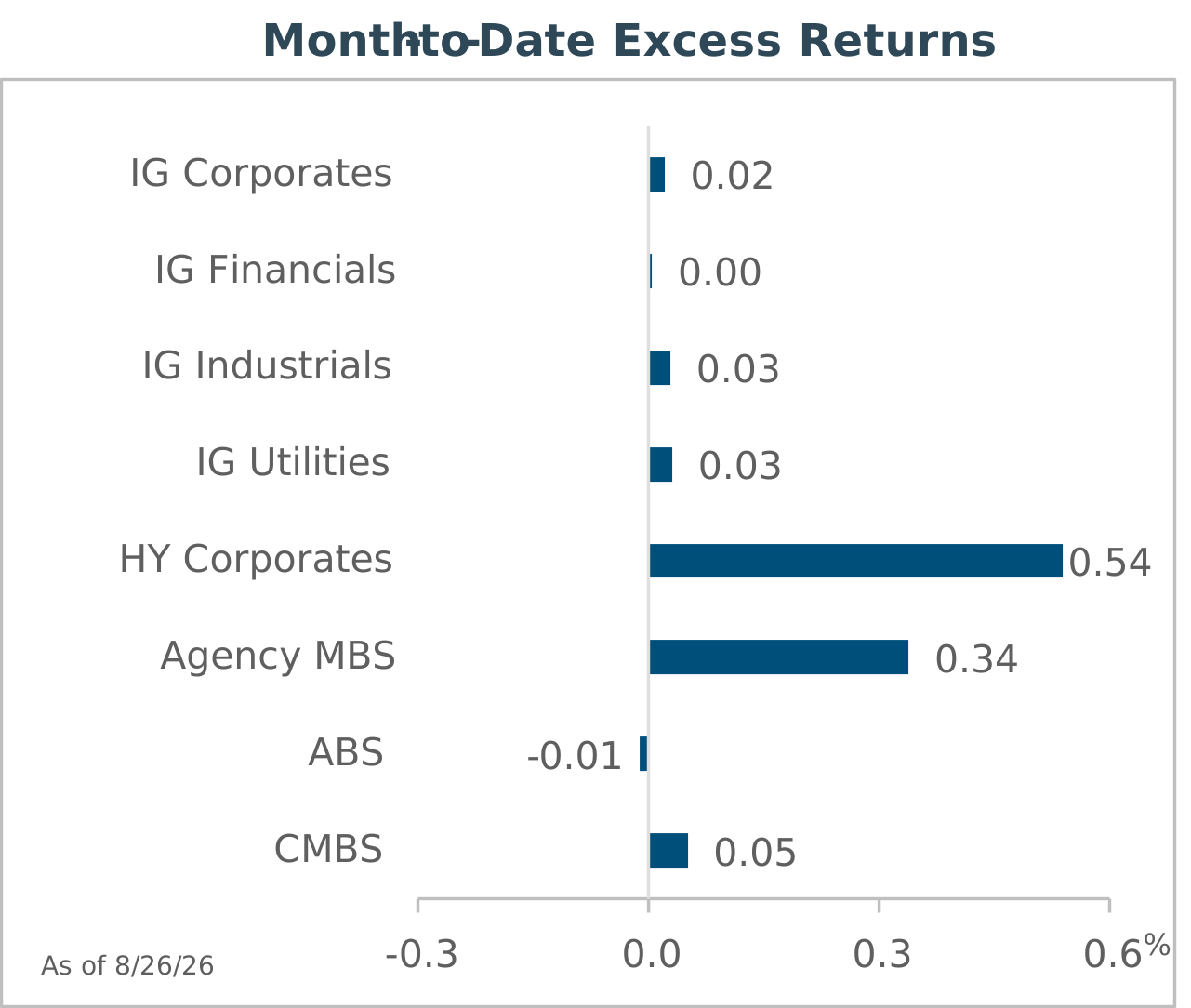
This week offered little shortage of potential market catalysts, from inflation data to the upcoming Jackson Hole symposium, yet fixed income markets remained relatively orderly. Buyers continued to step in at higher yield levels, helping keep spreads in tight trading ranges. The next test may come after Labor Day, when a traditionally heavy supply calendar meets elevated dealer inventories and a market already digesting substantial issuance. Neither development is a surprise, which is precisely why investors may be underestimating their importance – well-telegraphed events do not always produce predictable outcomes. If demand proves less robust than expected, even temporarily, periods of spread volatility could emerge and reintroduce dispersion across sectors and issuers.

- Signs of renewed labor market resilience and muted inflation reinforced expectations that the Federal Reserve (Fed) will be patient in September, as investors await Fed Chair Warsh’s Jackon Hole speech for further policy guidance
- Initial jobless claims declined by 3,000 to 203,000, below expectations of a 2,000 increase, while continuing claims fell to 1.78 million
- Core PCE increased 0.2% month-over-month and held steady at 3.3% year-over-year in July, in line with expectations, while personal income and personal spending rose 0.4% and 0.2%, respectively
- The market-implied probability of a September rate hike was 37%, while investors fully priced one 25bp hike by year-end
- The Treasury curve flattened as resilient economic data pushed short-dated yields higher, while buyback-related demand supported the long end
- The 2-year Treasury rate rose 5bps to 4.21%, while the 30-year yield fell 2bps to 5.17%
- Primary markets were quiet due to the seasonal slowdown ahead of the Labor Day holiday; investment-grade (IG) supply totaled just shy of $6 billion, while no high-yield (HY) deals priced
- Corporate spreads benefited from the firmer market tone, as IG and HY spreads tightened by 1bp and 5bps, respectively, to 79bps and 265bps
- Asset-backed securities (ABS) outperformed other securitized subsectors as light supply provided a tailwind for the sector; ABS spreads were unchanged on the week at 44bps
- Demand for municipals remained robust, as municipal bond funds reported $1.4 billion of net inflows last week