Monetary policy remains central to markets, even as geopolitical developments have recently dominated headlines, and the range of potential paths is widening. Recent commentary, including from Kevin Warsh, underscores an active debate around the Fed’s reaction function amid uneven data and persistent inflation risks. Markets have oscillated between pricing rate cuts and renewed tightening, reflecting this uncertainty. The risk is not simply whether policy proves too loose or too restrictive, but the resulting interest rate volatility driven by shifting market expectations. As attention gradually shifts toward the Fed leadership transition, we are closely monitoring how changes in communication and framework could influence market pricing and risk sentiment.

- Investors welcomed a US-Iran ceasefire extension and largely looked through the risk of renewed escalation, supporting risk assets – equities hovered near all-time highs while spreads remained near historical tights
- Higher gasoline prices did little to deter broader consumption, with US retail sales rising 1.9% in March and all major categories posting gains
- Kevin Warsh, President Trump’s nominee for Federal Reserve (Fed) Chairperson, testified before the Senate Banking Committee on Tuesday, emphasizing independence in monetary policy
- He also signaled potential changes to the Fed’s decision-making and communication framework, introducing an additional layer of policy uncertainty for markets
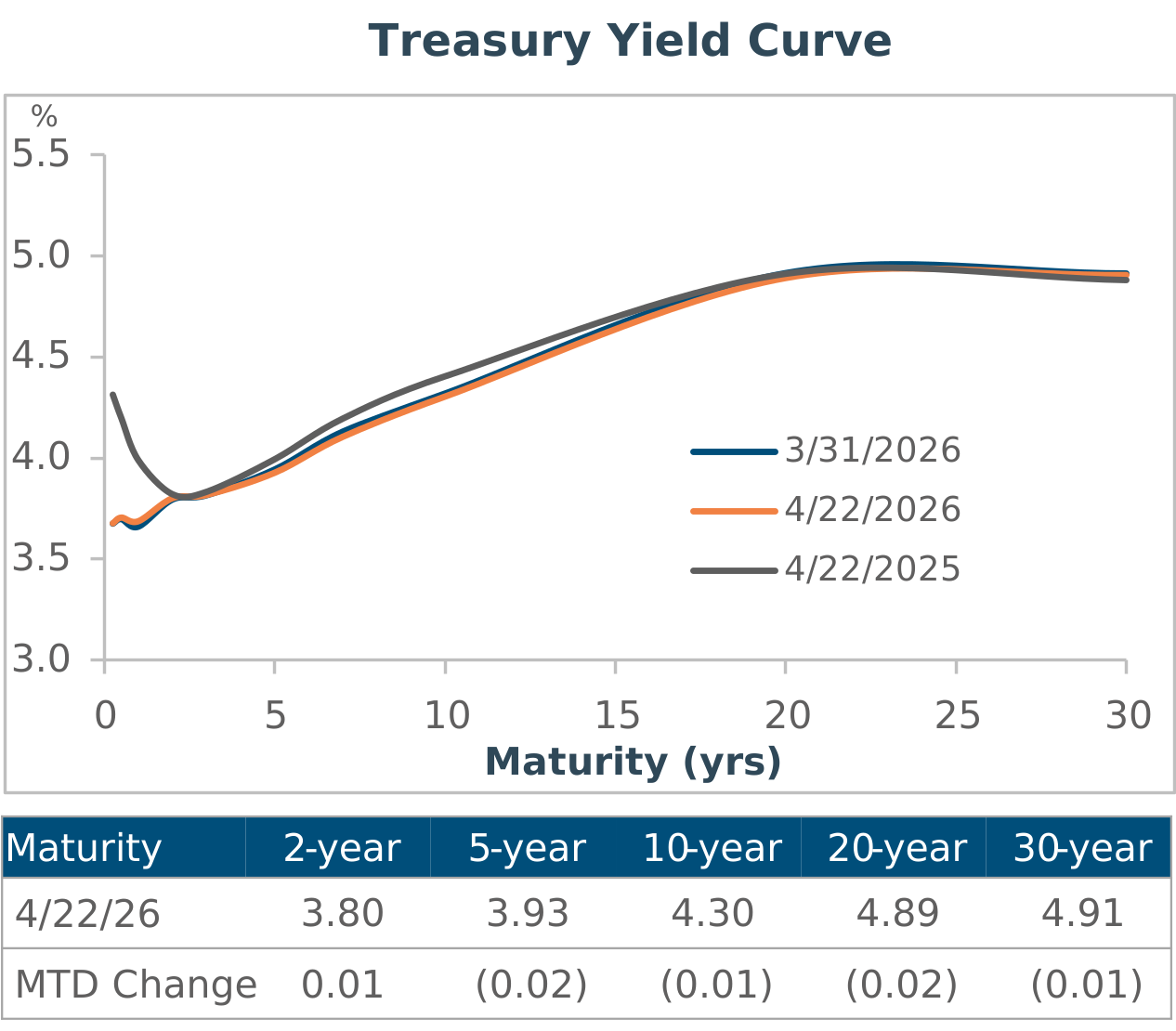
- A light economic calendar contributed to a relatively stable backdrop for Treasuries, with the 2- and 10-year Treasury yields rising modestly by 4bps and 2bps, respectively, to 3.80% and 4.30%
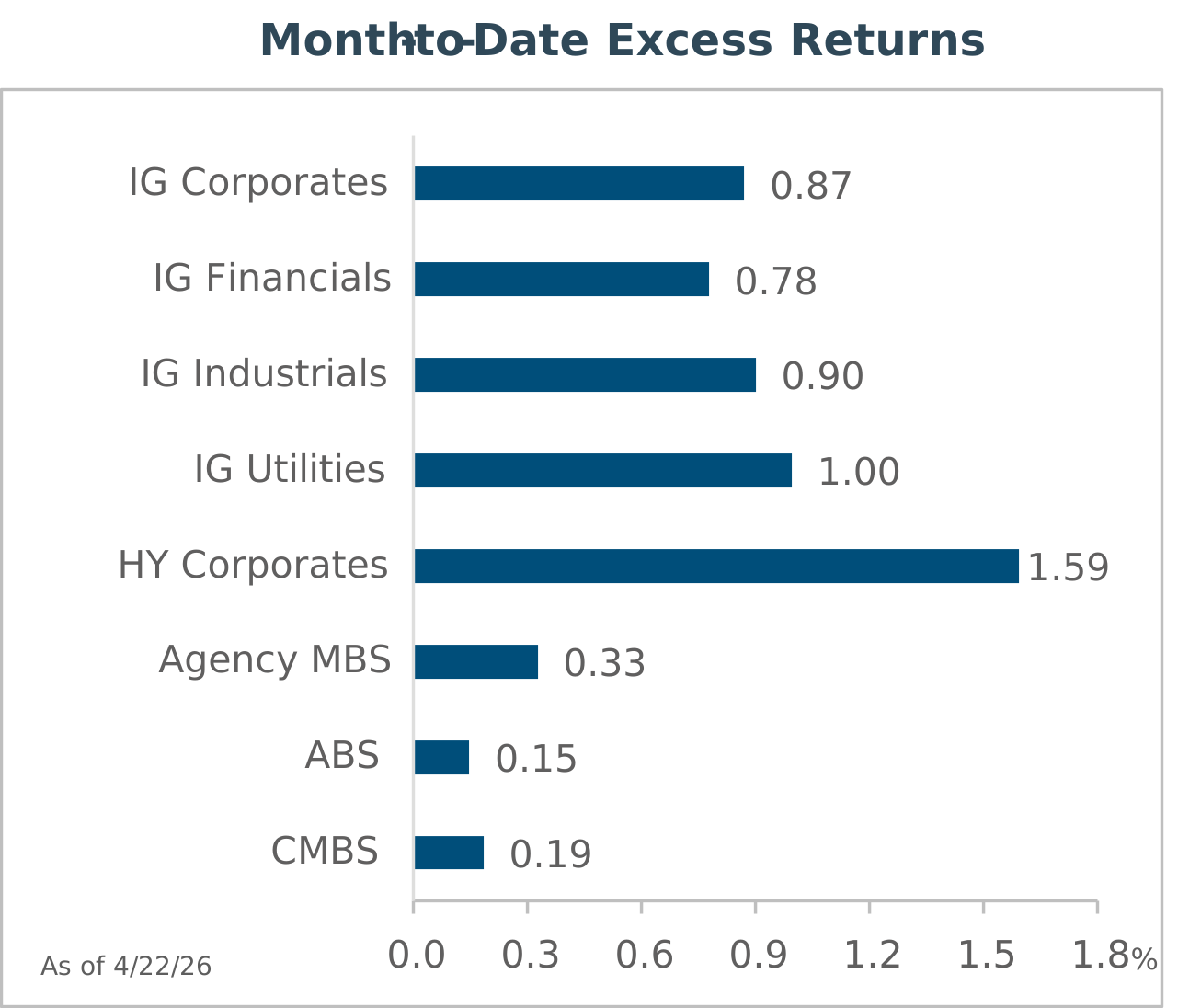
- Investment-grade (IG) and high-yield (HY) corporate spreads were range-bound this week given light trading volumes and limited catalysts; IG spreads tightened 1bp to 77bps, while HY spreads were unchanged at 269bps
- Investment-grade corporate supply totaled just under $16 billion, below expectations of $20-25 billion, as many issuers remained sidelined due to earnings blackout periods
- The high-yield primary market experienced a wave of issuance, surpassing $7 billion, supported in part by demand tied to data center and infrastructure-related financing
- Non-agency commercial mortgage-backed securities (CMBS) outperformed Treasuries as light supply provided a positive tailwind for the sector, with issuance continuing to skew toward single-asset single-borrower (SASB) deals over traditional conduit deals
- Municipals across the curve have continued to outperform Treasuries; the yield of the Bloomberg Municipal Index stands at 3.59%, equal to the trailing average since the hiking cycle concluded in 2022