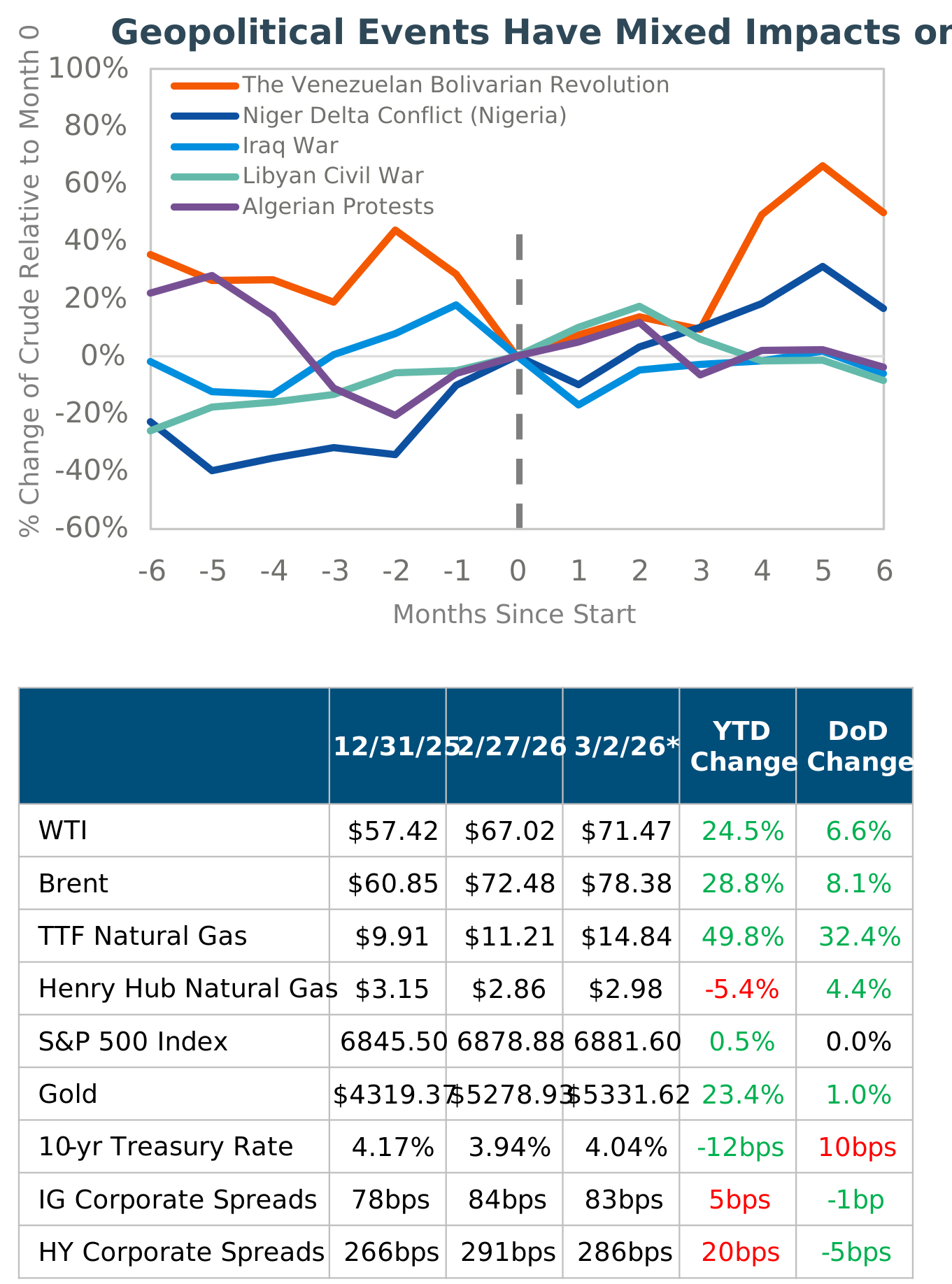

Thus far, the market reaction to the ongoing conflict between the US, Israel, and Iran has been relatively muted, suggesting the escalation was at least partly priced in last week. As expected, energy prices, such as oil and liquified natural gas (LNG), have increased as the Middle East remains a production and transportation hub for these commodities. While the short-term economic impact appears to be relatively benign, the longer-term consequences could be more significant if the conflict becomes prolonged and intensifies (higher inflation, increased deficits, strain on lower-end consumer…). We continue to monitor developments closely for potential portfolio impacts and opportunities.
RECENT DEVELOPMENTS
- On Saturday, the US and Israel fired missiles at targets across Iran to eliminate “imminent threats,” while urging local people to overthrow the Islamic regime.
- Tehran responded with strikes against Israel, as well as US bases and other targets in Saudi Arabia, Qatar, the United Arab Emirates, Kuwait and Bahrain.
- Iran’s Supreme Leader, Ayatollah Ali Khamenei, was subsequently killed; a three-member council consisting of the president, head of judiciary and a rep from Iran’s Guardian council will govern until a new leader is chosen.
- Shipments through the Strait of Hormuz — a conduit for 20% of the world’s oil and gas — slowed sharply, with shipping suspended, insurers reassessing risk and some shipowners relying on war clauses to cancel voyages.
MARKET REACTION
- Energy Prices – After initially rising, prices quickly stabilized, with European natural gas experiencing the largest impact after Qatar halted production at facilities targeted during the attack.
- Rates – US Treasury rates rose 5-12bps as the conflict pushed oil prices higher, fueling higher inflation concerns, especially after ISM input prices soared.
- Corporates – The spread response was relatively muted across investment-grade (IG) and high-yield (HY), with spreads mostly tighter. HY energy issuers were the outlier, with spreads roughly 23bps tighter day-over-day.
- Securitized – Most subsectors appear relatively insulated from the geopolitical events, as reflected in muted spreads moves.
POTENTIAL IMPLICATIONS
- Energy Prices – Iran is a relatively small oil producer (roughly 3% of global), but the country is strategically located along the Strait of Hormuz. A prolonged conflict or further escalation could result in even more upside potential for energy prices, with >$100/barrel WTI not out of the question.
- Inflation – These disruptions are generally stagflationary (higher oil, higher inflation, lower growth), but much depends on the conflict’s duration. After today’s higher ISM Prices Paid Index print, the market is lowering the probability of two rate cuts in 2026. We expect inflation to remain a central theme as developments unfold.