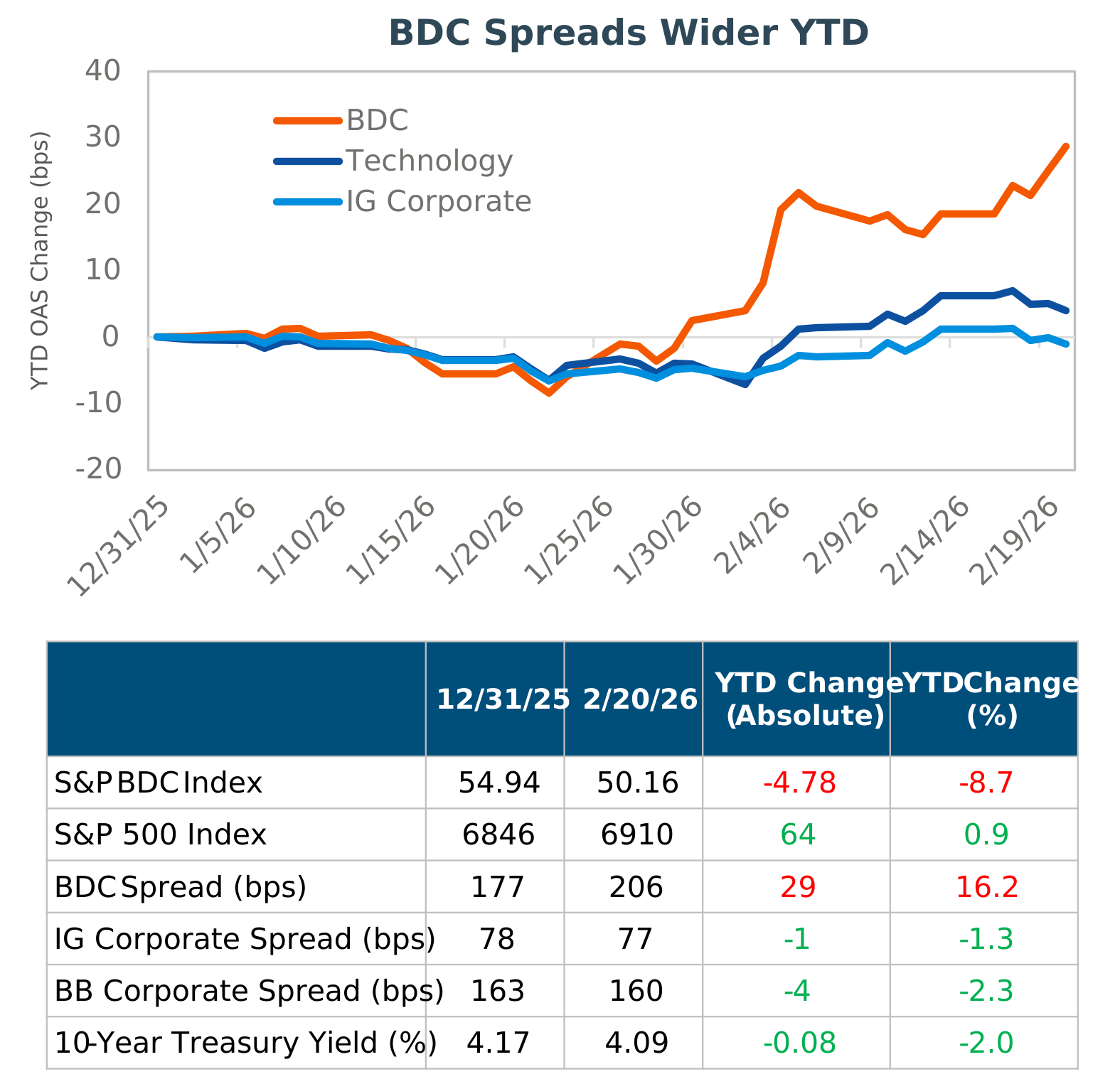
 As media scrutiny around BDCs intensifies, we believe the sector’s recent spread widening is driven more by headlines than by a meaningful shift in fundamentals. Applying our time-tested, bottom-up credit research approach, we are evaluating risks deliberately rather than reacting to the noise. This discipline helps us uncover attractive, short-duration bonds at spreads we view as more than compensatory, issued by best-in-class managers with strong underwriting and liquidity designed to navigate market weakness. With our experienced team, we are leaning into the volatility and prudently capitalizing on sentiment-driven dislocations — not retreating from them.
MARKET BACKDROP
- There has been a notable increase in headlines surrounding possible AI-disruption over the last few weeks, especially for software/SaaS-adjacent industries.
- The BDC sector has been under heightened scrutiny given the significant growth of the sector and the concentration of software exposure.
- BDC spreads have widened by 20–60bps year-to-date, while investment-grade corporates are 1bp tighter.
RECENT DEVELOPMENTS
- Last week, Blue Owl announced a $1.4 billion sale of direct-lending assets at roughly 99.7% of par, spread across three BDCs, with proceeds supporting liquidity, deleveraging, and investor payouts.
- The portfolio was sold to three large public pensions and Kuvare, an insurer affiliated with Blue Owl.
- Investors of OBDCII, the private retail debt fund, will receive roughly 30% of capital over the next 45 days, compared to historically tendering up to 5% quarterly.
- OBDCII, now in liquidation mode, will no longer offer regular quarterly liquidity, relying instead on asset sales, repayments, or strategic transactions to return capital each quarter.
- Several third parties have since offered liquidity to shareholders at a substantial discount to NAV, adding to the negative sentiment.
IMPLICATIONS
- There has always been an asset-liability mismatch for private BDCs that cater to retail clients, offering quarterly liquidity for an illiquid asset class. To date, managers have addressed quarterly client redemptions by operating with low leverage while new monthly inflows continue to roll in.
- It appears that managers are hesitant to limit withdrawals due to reputational concerns. However, as experienced by non-traded REITs in the Federal Reserve’s prior rate hiking cycle, eventually quarterly redemptions must be capped to enable a proper sales process for illiquid assets, thus avoiding a fire sale.
- The catalyst for redemptions in this case has been exacerbated by AI/software concerns, despite underlying credit performance that has been good for the majority of managers. This credit quality is what enabled a large portfolio of loans to be sold at par. However, in a weaker economic backdrop, where withdrawals pickup as credit quality begins to deteriorate, par would not be the executed price.