Hiding in Plain Sight: The Gas Prepay Bonds Opportunity
With $4.5 trillion in debt outstanding, the US municipal bond market offers fertile ground for investors well-equipped to capitalize on nuance and inefficiency. Record-setting issuance continues to capture headlines while expanding the opportunity set for active managers. Once a relatively under-the-radar sector, gas prepay bonds have emerged as one of this year’s municipal market standouts, with $30 billion in issuance through August 2026. Yet as the sector represents a growing portion of overall supply and the index, its structural complexities can be a barrier for investors who lack the resources or expertise to evaluate these securities. At IR+M, we believe that opportunity often resides in the details. Our rigorous research approach helps us navigate this liquid, but commonly misunderstood, sector and uncover potential value for our clients’ portfolios.

Deconstructing Gas Prepay Bonds
- Municipal finance and energy prepays – an unlikely pairing. First issued in the 1990s, the IRS initially scrutinized gas prepay bonds over concerns that private entities could benefit from tax-exempt proceeds. In 2003, the IRS established clearer requirements for tax exemption, generally requiring utilities to deliver at least 90% of the prepaid gas to retail customers within their service areas. Congress later codified a modified version of those rules through the Energy Policy Act of 2005.
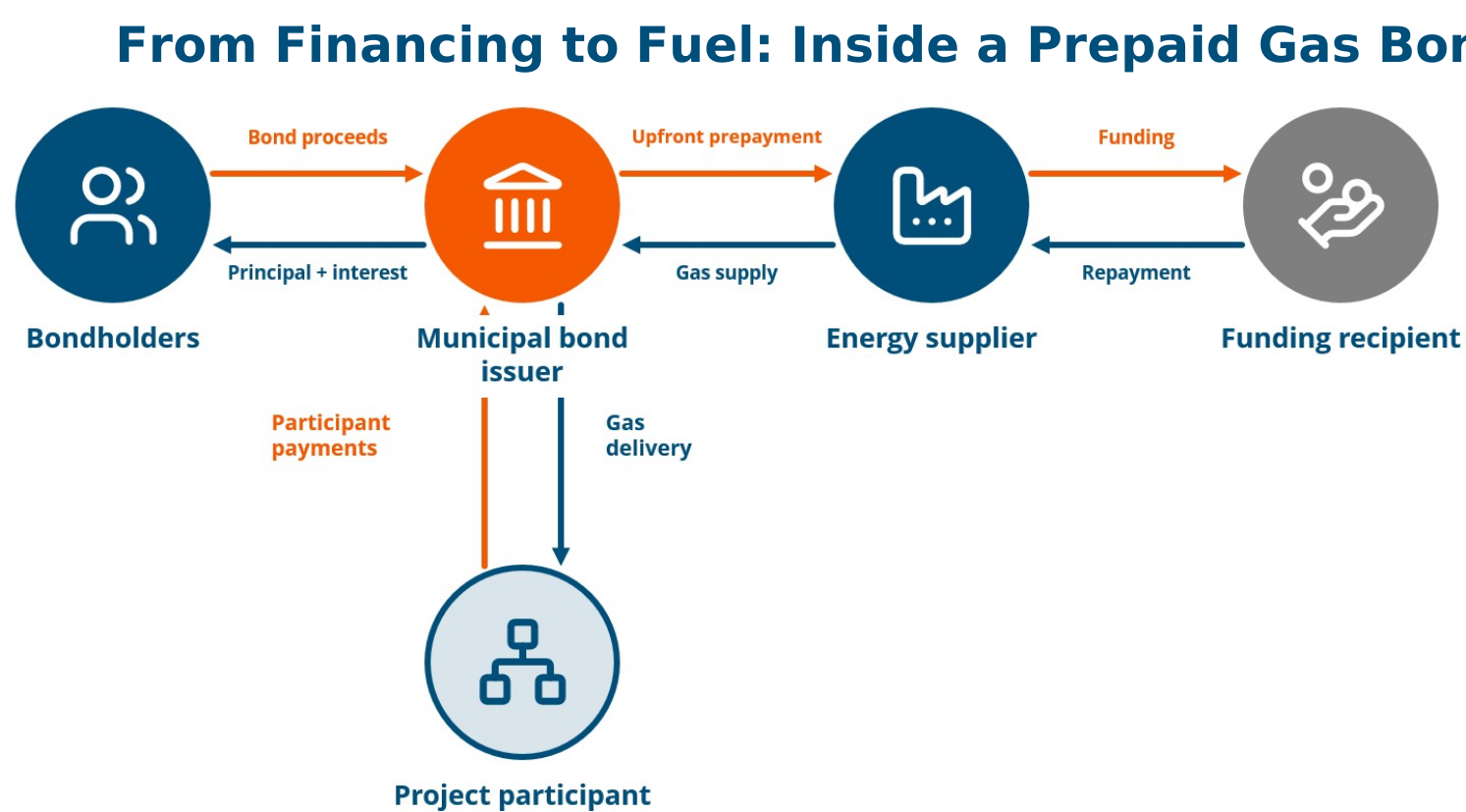
- Where bond proceeds meet energy. A municipal entity issues tax-exempt debt and uses the proceeds to purchase an extended supply of natural gas, and sometimes electricity, upfront. As participating utilities receive and pay for the energy, those payments ultimately support debt service to bondholders.
- Prepayment can produce meaningful savings. In exchange for purchasing energy upfront, utilities typically secure supply at a contractual discount to prevailing market prices. These savings can reduce operating costs while providing greater certainty around future energy expenses.
- Beyond the municipal wrapper. Although gas prepay bonds are issued through municipal entities, repayment generally depends on a corporate guarantor, which is often a financial institution. As a result, a bond’s rating and performance tend to reflect the creditworthiness of the corporate guarantor than that of the utility.
- Scale supports liquidity. Gas prepay transactions are typically large and institutionally sized, making them relatively liquid compared with many smaller, more fragmented municipal issues. This combination of scale, liquidity, and structural complexity can create an attractive opportunity set for investors equipped to evaluate the sector.
Gas Prepay Bonds Shift Into High Gear
- Foot on the gas pedal. Between 2016 and 2018, gas prepay bond issuance increased markedly, rising from $1.2 billion to $9.7 billion. While the pandemic briefly interrupted that trajectory, the sector roared back in 2021 and has yet to slow down.
- Another record-setting year. In 2025, gas prepay bonds reached a new annual peak of $33.1 billion. In August 2026, the year-to-date volume exceeded $30 billion, likely en route to a new all-time high. That level – an 86% year-over-year increase – has brought the market’s overall size to around $130 billion.
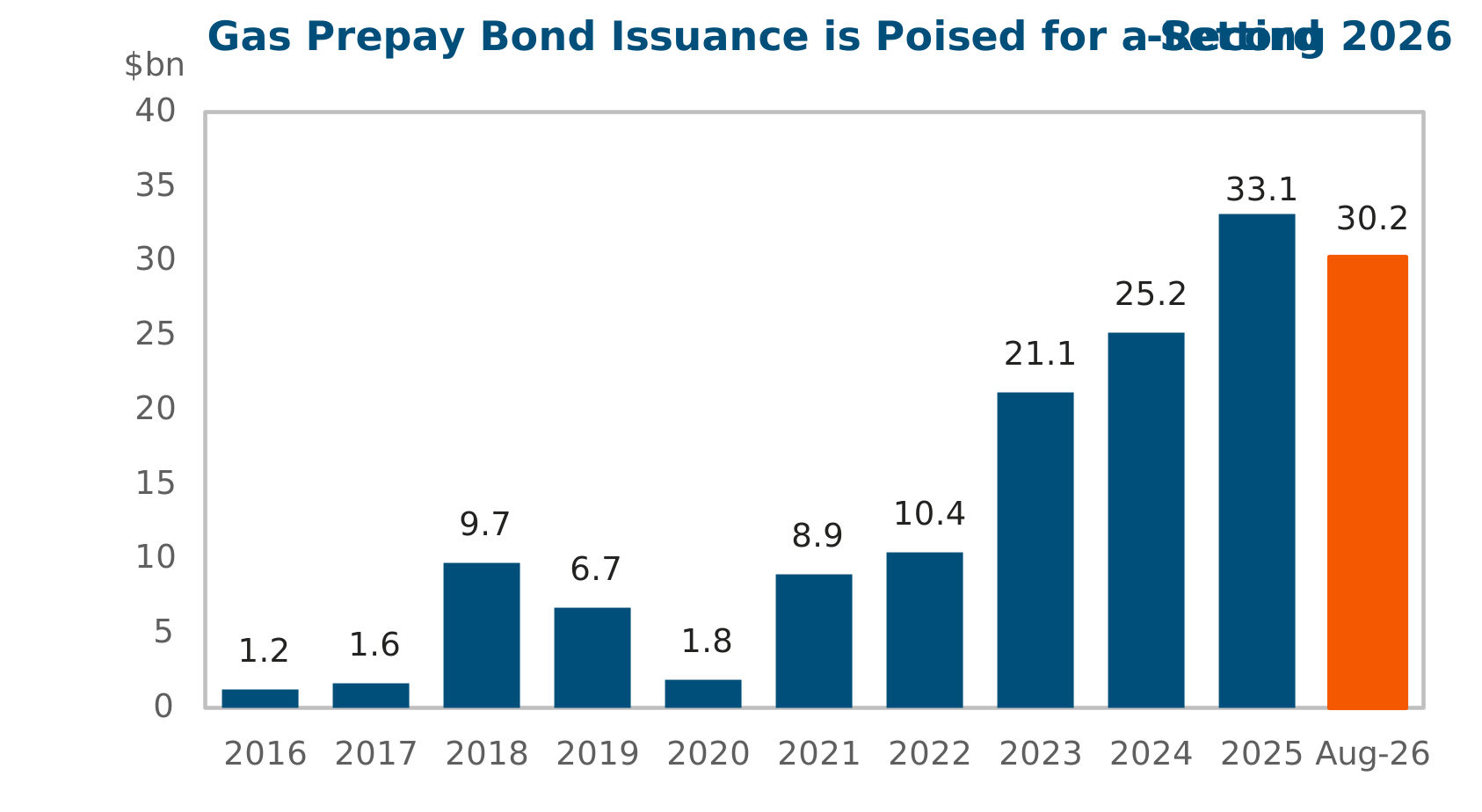
- Behind the issuance story. The recent issuance surge is the product of a perfect storm. Elevated interest rates and a greater difference between taxable and tax-exempt borrowing costs have strengthened the economics of prepaid transactions. Also, with increased power demand and uncertainty around future energy prices, utilities are more motivated to procure discounted supply through long-term agreements.
- The market continues to evolve. While banks still play a pivotal role in the sector, insurers and other corporate guarantors are bringing new funding needs and structures to the market. Prepaid securities are also expanding beyond their natural gas origins to electricity and renewable power generated by solar, hydroelectric, and wind resources.
- The increasing value of selectivity. As the gas prepay market has evolved, so has the disparity among guarantors, contractual protections, and structures. Many investors overlook these nuances, leading to valuation gaps that active managers can capitalize on by identifying bonds they believe offer yields that more than compensate for the risks.
The View from the IR+M Desk
- Complexity creates opportunity. At IR+M, we believe gas prepay bonds can offer compelling relative value through incremental tax-exempt income, often-strong counterparty credit quality, and structural complexity. In many cases, gas prepays may also provide a wider tax-equivalent spread than a senior unsecured bond issued by the same financial institution. Record issuance, new guarantors, and the sector’s expansion into conventional and renewable electricity have increased dispersion across transactions and broadened the opportunity set for active managers.
- Two markets require one integrated view. Our research team brings together our municipal market knowledge and corporate credit analysis to evaluate links in the structure: the issuer, funding recipient, energy supplier, and corporate guarantor. We also examine payment waterfalls, commodity swaps, collateral arrangements, and termination provisions to understand how each element supports or potentially disrupts bondholder repayment.
- Spread is never a substitute for scrutiny. We selectively invest in gas prepay bonds, only participating when we believe the yield is adequate compensation for the underlying credit, structural, and liquidity risks. No two gas prepay bonds are exactly alike, and at IR+M, our comprehensive research approach aims to capture those differences.